Articles for category: Fossils & Fieldwork

Fossil of a bird-like dinosaur, with outstretched wings and visible skeletal details, preserved in beige rock, conveying a sense of ancient history.

How Do Paleontologists Study Dinosaur Behavior from Fossils?

Unlocking the secrets of dinosaur behavior is like assembling a complex puzzle with many missing pieces. Paleontologists face the remarkable challenge of understanding how creatures behaved millions of years ago, with only their fossilized remains as evidence. Despite these limitations, scientific ingenuity and advancing technology have enabled researchers to develop sophisticated techniques for interpreting dinosaur ...

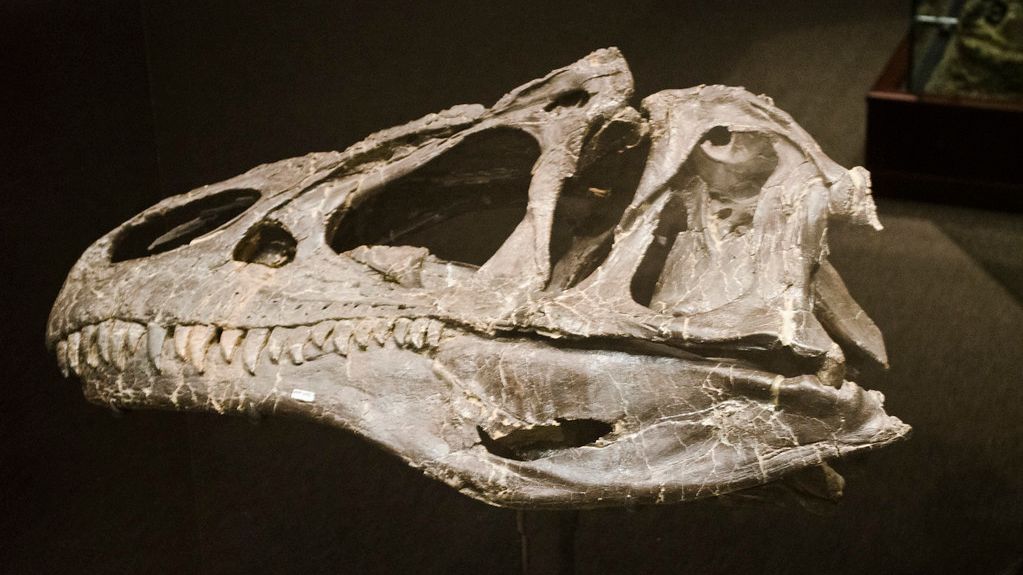
Big Al Allosaurus

Dinosaur Detectives: How Clues in Bones Rewrite History

Dinosaurs have captivated human imagination since the first fossilized remains were scientifically recognized in the early 19th century. Yet our understanding of these magnificent creatures continues to evolve dramatically with each new discovery. Modern paleontology has transformed from simply collecting bones to a sophisticated multidisciplinary science that combines geology, biology, chemistry, and advanced imaging technologies. ...

Fossilized skeleton of a prehistoric platypus embedded in sandy rock. The detailed bones include a distinctive skull and ribcage, conveying ancient history.

When Fossils Go Wrong: What Mistakes Can Teach Us About the Process

The science of paleontology is often portrayed as a precise discipline where experts carefully excavate and reconstruct ancient organisms with surgical accuracy. However, the reality includes numerous missteps, misinterpretations, and outright blunders that have shaped our understanding of prehistoric life. These “fossil fails” aren’t simply embarrassing footnotes in scientific history—they represent valuable learning opportunities that ...

Hyphalosaurus lingyuanensis-Liaoning, China - Napoli Paleontological Museum

What Is a Fossil and How Is It Formed?

Fossils are remnants or traces of ancient organisms preserved in the Earth’s crust over geological time. These natural time capsules provide scientists with critical information about extinct species, ancient ecosystems, and the evolution of life on our planet. Dating back hundreds of millions and even billions of years, fossils form a crucial link to Earth’s ...

A rare gem from the past: Barb Beasley’s discovery of a Tyrannosaurus rex tooth during a 2012 Passport in Time excavation in the iconic Hell Creek Formation.

Fossil Forensics: What a Single Tooth Can Tell Us About the Past

A single ancient tooth, sometimes no larger than a thumbnail, can unlock extraordinary secrets about life on Earth millions of years ago. In the skilled hands of paleontologists and researchers, these seemingly modest remains transform into powerful storytelling devices that illuminate extinct species, ancient ecosystems, and even evolutionary turning points. Fossil teeth serve as time ...

Could We Clone a Dinosaur

How Do Scientists Determine a Dinosaur’s Age?

When we marvel at towering dinosaur skeletons in museums, we’re often told these magnificent creatures lived millions of years ago. But how exactly do scientists determine when these prehistoric giants roamed the Earth? The process of dating dinosaur fossils involves multiple scientific disciplines and sophisticated techniques that have evolved significantly over the decades. From examining ...

Microraptor's aerodynamic feathers hint at gliding or even early flight, soaring through prehistoric skies.

Are We Over-Interpreting Fossils with Modern Bias?

The study of ancient life through paleontology has revolutionized our understanding of Earth’s biological past. By examining fossils—preserved remains or traces of organisms from previous geologic periods—scientists reconstruct extinct species and ecosystems that existed millions of years ago. However, a growing concern within the scientific community questions whether modern human biases and perspectives unconsciously influence ...