Articles for category: Fossils & Fieldwork

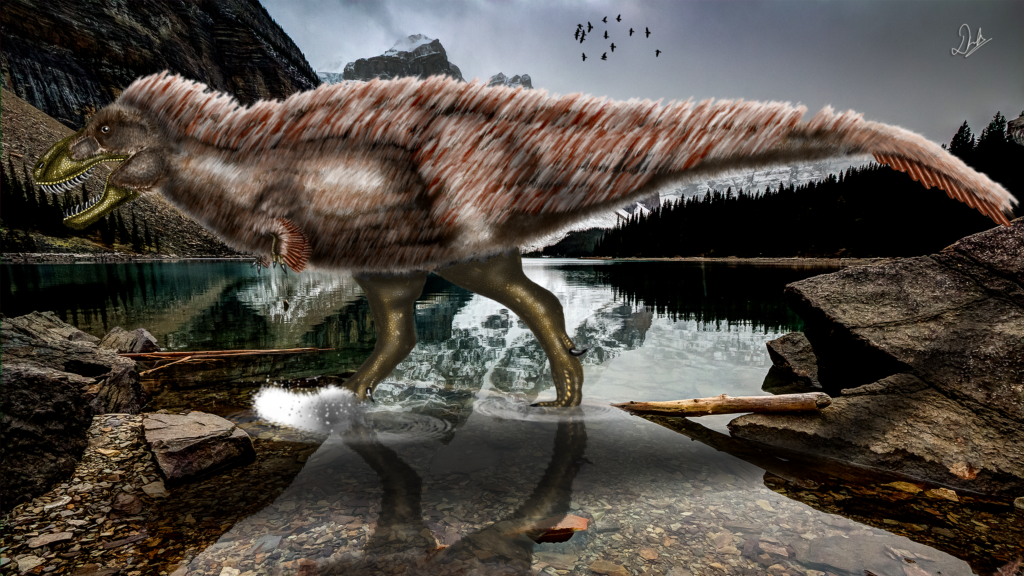
The Cretaceous Color Palette

A Colorful Cretaceous: How Flowers Painted Dinosaur Habitats

Picture a world where colossal dinosaurs roamed through landscapes we’d barely recognize today. Now add a revolutionary element that transformed these ancient ecosystems forever – the first flowers blooming across the Earth. The Cretaceous period wasn’t just the age of dinosaurs; it was nature’s most spectacular botanical makeover in history. The Great Plant Revolution Begins ...

Radiometric Dating

What Is Radiometric Dating and How Does It Work?

Radiometric dating is one of science’s most powerful tools for understanding Earth’s history and the age of objects found within its layers. This sophisticated technique allows scientists to determine the age of rocks, fossils, and archaeological artifacts with remarkable precision, sometimes spanning billions of years. Unlike relative dating methods that can only tell us if ...

Fossil of a prehistoric bird-like creature with spread wings, detailed bones, and feather impressions, embedded in a beige stone slab.

What Happens When You Find a Fossil on Federal Land?

Discovering a fossil can be an exhilarating experience that connects us to Earth’s ancient past. However, when such a discovery occurs on federal land in the United States, specific laws and procedures immediately come into play. Federal lands encompass national parks, forests, wildlife refuges, and Bureau of Land Management areas—collectively covering about 640 million acres ...

Visitors observe a large fossil excavation site from a raised platform. The setting has a historical ambiance, showcasing ancient skeletal remains.

9 Dinosaur Digs Funded by Unexpected Sources (Including Hollywood)

The fascinating world of paleontology often conjures images of dusty academics meticulously brushing away sand from ancient bones. However, the reality of funding these crucial scientific endeavors is far more complex and, at times, surprisingly creative. While government grants and university endowments traditionally support paleontological research, some of history’s most significant dinosaur discoveries have been ...

A large dinosaur skeleton with a long neck and tail is displayed in a museum. Overhead lighting casts a warm glow, highlighting the bones.

The Price of Fame: How Dinosaur Discoveries Get Twisted for Headlines

In the competitive world of science journalism, few subjects capture public imagination quite like dinosaur discoveries. These prehistoric beasts, having dominated Earth for over 165 million years, continue to fascinate us through museum exhibits, movies, and news stories. However, the journey from scientific discovery to public consumption is fraught with distortion. Paleontologists frequently find their ...

Tiktaalik fossil

What Are Transitional Fossils and Why Do They Matter?

Deep within the Earth’s strata lie some of the most compelling evidence for evolution—transitional fossils. These remarkable specimens document crucial evolutionary moments when one group of organisms was evolving into another, providing us with snapshots of life’s incredible journey across time. Transitional fossils bridge morphological gaps between major groups of organisms, offering scientists invaluable insights ...

"Stan" the T-rex, on exhibit at the Glendive Dinosaur and Fossil Museum

Should Kids Be Digging for Fossils—or Are We Damaging History?

Across beaches, quarries, and eroding hillsides, families and young enthusiasts regularly embark on fossil-hunting adventures. The joy of discovering a perfectly preserved ammonite or a dinosaur tooth fragment is undeniable, especially in the eyes of a child. However, as more people take up amateur paleontology, a significant question emerges: Should we be encouraging children to ...

Glowing blue jellyfish drift gracefully in dark water. Their translucent bodies create a serene, ethereal scene under a deep sea backdrop.

Why Most Creatures Never Fossilize — And Why That Matters

The history of life on Earth spans billions of years, with countless species having lived and died across the planet’s dynamic lifetime. Yet our fossil record—the collection of preserved remains that informs our understanding of prehistoric life—represents only a tiny fraction of all organisms that have ever existed. This remarkable disparity isn’t just a curious ...