Articles for category: Fossils & Fieldwork

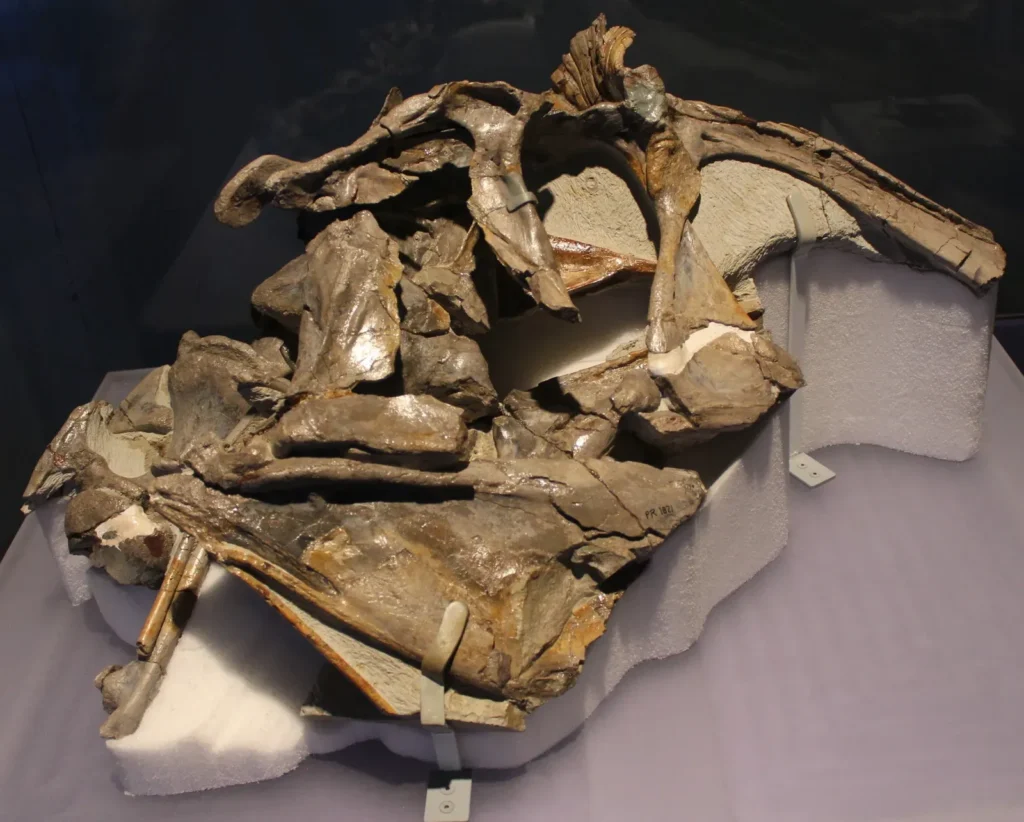
a close up of a fake dinosaur head

Pachycephalosaurus: The Dome-Headed Brawler of Hell Creek

In the twilight years of the Cretaceous period, approximately 70-65 million years ago, a remarkable dinosaur roamed the landscapes of what is now North America. Pachycephalosaurus wyomingensis, with its distinctive domed skull and combative nature, represents one of paleontology’s most fascinating subjects. This large, bipedal herbivore belonged to the pachycephalosaurid family and has captured the ...

Elmer Riggs, the first curator of Fossil Mammals wearing cap and field laboratory assistant Harold W. Menke preparing Grand Junction Colorado fossils including the Brachiosaurus altithorax femur still in plaster jacket at left, Paleontology Laboratory, Field Columbian Museum, Geology specimen, December 1, 1894.

Early Fossil Labs: Where Dinosaur Bones Were Studied Before Microscopes

Long before electron microscopes and CT scanners revolutionized paleontology, scientists worked in rudimentary settings to unlock the mysteries of prehistoric life. The earliest fossil laboratories were far from the sophisticated facilities we know today, yet they laid crucial groundwork for our understanding of dinosaurs and other ancient creatures. These pioneering spaces represented the first systematic ...

Allosaurus skeleton in Smithsonian National Museum of Natural History

This Fossil May Prove Dinosaurs Were Cannibals — Or Not

Paleontology often finds itself at fascinating crossroads where evidence suggests intriguing behaviors in prehistoric creatures, only to be met with compelling counterarguments. One such contentious debate centers around potential cannibalism in dinosaurs. A particular fossil discovery has reignited this discussion, presenting what some researchers interpret as clear evidence of dinosaur-on-dinosaur predation, while others remain skeptical. ...

7 Astounding Prehistoric Discoveries That Challenged Paleontology's Dogma

7 Astounding Prehistoric Discoveries That Challenged Paleontology’s Dogma

Have you ever stopped to think about how much we still don’t know about our planet’s ancient past? Just when scientists believe they’ve figured out the storyline of prehistoric life, a single bone, footprint, or preserved fragment emerges from the ground and throws everything into question. The field of paleontology has built its reputation on ...

The US States With The Most T Rex Fossils

The US States With The Most T Rex Fossils

When you think about dinosaurs, specifically the legendary Tyrannosaurus rex, you’re probably picturing massive jaws and thunderous footsteps echoing through ancient landscapes. These prehistoric beasts once ruled what is now the United States, leaving behind incredible evidence of their existence. The hunt for T rex fossils continues to captivate scientists and enthusiasts alike, sparking debates ...

Piltdown man, a famous paleontological hoax concerning the finding of the remains of a previously unknown early human

How Fake Fossils Nearly Fooled the Scientific Community

In the quest to understand our planet’s ancient past, paleontologists and archaeologists rely on fossils as tangible windows into prehistoric times. Yet throughout history, this scientific pursuit has been plagued by frauds, hoaxes, and misidentifications that have sometimes led even the most esteemed researchers astray. From elaborate pranks to financially motivated forgeries, fake fossils have ...

Archaeopteryx lithographica Thermopolis

What Is This Bone? The Fossil No One Can Identify

In the vast annals of paleontology, most discoveries fit neatly into taxonomic categories – a dinosaur limb here, a mammalian skull there. But occasionally, researchers unearth specimens that defy easy classification, leaving even seasoned experts scratching their heads in bewilderment. These mystery fossils represent some of the most intriguing challenges in paleontology, offering tantalizing glimpses ...

an aerial view of a river and land

What River Deltas Teach Us About Dinosaur Deaths

River deltas—those fan-shaped sedimentary deposits where rivers meet larger bodies of water—have become crucial windows into Earth’s distant past. These dynamic environments preserve remarkable fossil records that offer paleontologists unique insights into mass extinction events, particularly the Cretaceous-Paleogene (K-Pg) extinction that wiped out non-avian dinosaurs 66 million years ago. The study of modern and ancient ...